

Cart
0
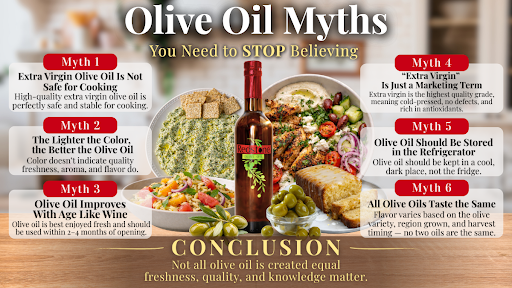
Olive oil extracted from extra virgin olives has been utilized for centuries, but it is still one of the least understood ingredients used in kitchens today. From concerns about cooking to storage confusion, misinformation usually hinders people from enjoying its full flavour and health benefits.
Let's get rid of the nonsense and debunk the most commonly repeated olive oil myths that you need to put aside.

Myth 1: Extra Virgin Olive Oil Is Not Safe for Cooking
This is among the most common myths.
The Truth:
Premium extra virgin olive oil is completely safe to cook with for sauteing, as well as cooking with light frying. Because of its antioxidants and monounsaturated fats, it is more stable under heat than other refined seed oils.
Extra virgin olive oil that is fresh is most effective when employed for:
- Sauteing vegetables
- Roasting
- Pan-frying
-
Warming up after a meal
The main thing is freshness and quality and not to avoid heat completely.
Myth 2: The Lighter the Color, the Better the Olive Oil
A lot of people evaluate olive oil based on its color, but that's not true.
The Truth:
The color of olive oil has nothing to do with the quality of the oil. Olive oil's color can vary from golden light yellow to deep green based on:
- Olive variety
- Harvest timing
-
Region
Professional tasters often utilize dark glasses to minimize any color bias. Aroma, flavor and freshness are more important than looks.
Myth 3: Olive Oil Improves With Age Like Wine
This is the reason for old, flavorless oil that has been sitting within kitchen cupboards for many years.
The Truth:
The best olive oil can be eaten fresh. As time passes, it gradually goes through the following stages:
- Aroma
- Flavor complexity
-
Antioxidant content
Fresh harvest oils are packed with taste and a wealth of health benefits, whereas older oils degrade slowly, even if not opened.
Myth 4: "Extra Virgin" Is Just a Marketing Term
There are many different olive oils that are labeled "extra virgin" that are not made equal.
The Truth:
Pure extra virgin olive oil must meet the strictest standards for:
- Acidity
- Flavor purity
- Defects not present
But the freshness, harvest date, and transparency in sourcing are what distinguish top oils from the average. Being aware of when and how your oil was created is more important than just the label.
Myth 5: Olive Oil Should Be Stored in the Refrigerator
This one is a surprise to many.
The Truth:
It's not necessary, but it can make olive oil harden and lose its aroma. The ideal storage conditions are:
- Cool
- Dark
- Far from light and heat
A cupboard or pantry is the ideal place to store food. Proper storage will preserve the flavor and the nutritional value.
Myth 6: All Olive Oils Taste the Same
If that were the case, the chefs wouldn't be obsessed with olive oil.
The Truth:
The flavor of olive oil can be quite different according to:
- Olive variety
- Harvest season
- Growing region
- Freshness
Certain oils are grassy and peppery, while others are soft and buttery. Lastly, balsamics and oils infused with spices offer a variety of new possibilities for food preparation.
Myth 7: Olive Oil Is Only for Savory Dishes
This myth stifles creativity in the kitchen.
The Truth:
It shines with olive oil in sweet and savory recipes. In baked items and desserts made with fruit Olive oil and balsamic vinegar can provide the richness, depth, and balance that isn't available with butter by itself.
Conclusion: Freshness Changes Everything
Most olive oil myths exist because people are used to old, overprocessed products. When you experience fresh, in-season extra virgin olive oil, everything changes—flavor, aroma, and health benefits included.
Understanding the truth helps you cook better, eat healthier, and enjoy olive oil the way it was meant to be enjoyed.


