
Cart
0
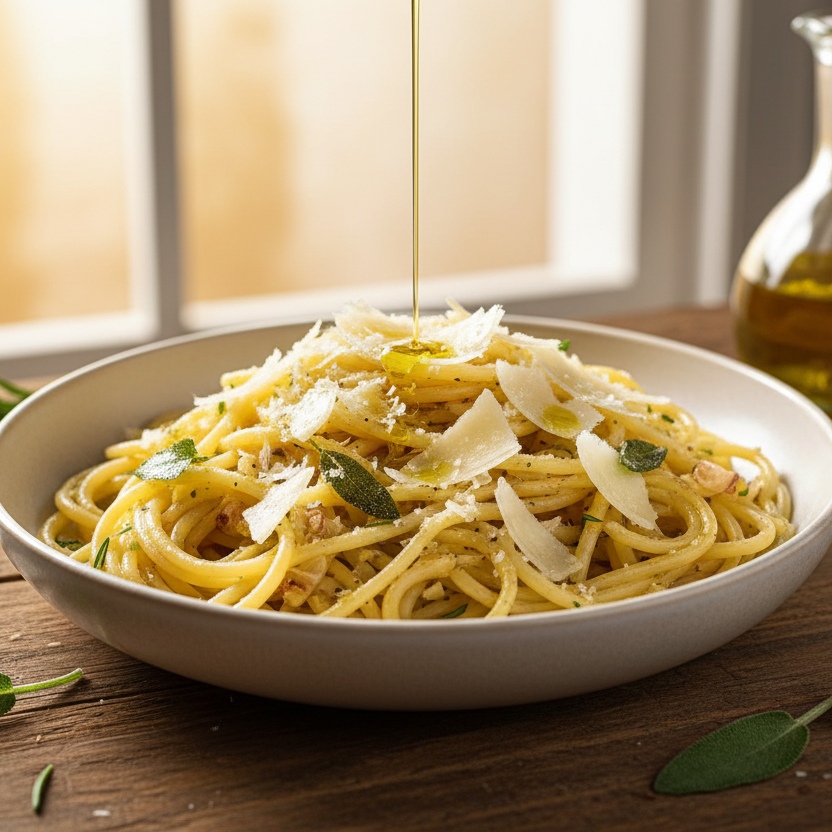
In Tuscany, the simplest dishes are the best, like this Tuscan herb olive oil pasta. It features spaghetti finished in garlic and herbs. This kitchen staple highlights the beauty of simple, high-quality ingredients.
This isn't just a background ingredient. It's olive oil as the sauce. In a dish this simple, everything depends on the quality of your oil. The dish depends on that richness.
A fruity, peppery extra virgin olive oil makes this recipe. A neutral or low-quality oil makes it forgettable. This meal comes together in 20 minutes.
What you need
Serves 4
- 400g spaghetti or linguine
- 6 tablespoons extra virgin olive oil (plus more to finish)
- 4 cloves garlic, thinly sliced
- 2 sprigs fresh rosemary
- 6 fresh sage leaves
- 1/2 teaspoon red pepper flakes
- 1/2 cup reserved pasta water
- 1/2 cup freshly grated Parmesan
- Flaky sea salt and black pepper
- Fresh flat-leaf parsley to finish
How to make your Tuscan herb olive oil pasta
Step 1 — Cook the pasta
Bring a large pot of water to a boil. Salt it heavily until it tastes like the sea. This is the first step to a great meal.
Cook your pasta until just under al dente. This is usually about 1 minute less than the package directions. It will finish in the pan.
Before you drain, reserve at least 1/2 cup of the pasta water. This is not optional. The starch is what creates the sauce.
Step 2 — Infuse the oil
While the pasta cooks, warm the olive oil in a large skillet. Use medium-low heat to ensure the flavors develop slowly and perfectly.
Add the sliced garlic, rosemary sprigs, and sage leaves. Cook gently for 4–5 minutes, stirring occasionally. The garlic should be soft and golden.
Keep the heat low because you are infusing, not frying. If the garlic starts to brown, pull the pan off the heat immediately.
Add the red pepper flakes and cook another 30 seconds. The aroma will tell you when the base for your meal is ready.
Step 3 — Bring it together
Add the drained pasta directly to the skillet. Add the pasta water a splash at a time. Use two or three additions while tossing constantly.
The starch from the water emulsifies with the oil. This forms a light, glossy coating that clings to every strand of pasta. This starch creates the pasta sauce.
Remove and discard the rosemary sprigs. The herbs have already imparted their oils into the beautiful pasta sauce.
Step 4 — Finish and serve
Pull the pan off the heat. Add the Parmesan and toss vigorously for a minute until it melts into the sauce. Taste and adjust salt.
Plate immediately to enjoy the texture. Finish each bowl with a fresh drizzle of olive oil, cracked black pepper, and torn parsley.
Why the olive oil matters here
Most pasta dishes hide the olive oil behind tomatoes, cream, or meat. This dish does not do that.
The oil is the primary flavor here. Everything else is seasoning. A high-polyphenol extra virgin olive oil brings a peppery, grassy complexity.
The infusion process draws those flavors out into the garlic and herb oil. That infused oil becomes the rich sauce of the dish.
This Tuscan herb olive oil pasta deserves the best. A refined or low-quality oil tastes neutral or stale. The dish will be edible, but you will miss the recipe's true depth.
For this recipe, we use Redstone's Tunisian Chetoui. It has 733 mg/kg biophenols and a robust finish. This oil transforms your Tuscan herb olive oil pasta into something gourmet.
The Italian Coratina is also excellent. It provides a more intensely herbal result for your meal.
Tips and variations
- Add lemon. A squeeze of lemon juice and some zest stirred in at the end adds brightness.
- Add anchovies. Two or three oil-packed anchovy fillets melted into the oil deepen the flavor significantly.
- Add white beans. Cannellini beans stirred in with the pasta make it more substantial. This is deeply traditional.
- Make it vegan. Skip the Parmesan. The herb-infused oil is excellent and flavorful on its own.
- Use different herbs. Thyme and fresh oregano work well. These add a different aromatic profile to the meal.
- Add Mushrooms. In winter, use dried porcini mushrooms. Rehydrate them in warm water and add them with the pasta water.
Frequently asked questions
What is the best olive oil for pasta?
Use a high-quality extra virgin olive oil with real flavor. It should be fruity and peppery. This makes a better meal.
A robust single-origin EVOO works especially well. Avoid light or refined oils, which have been processed to remove flavor and health benefits.
Can you cook pasta with extra virgin olive oil?
Yes. This recipe uses EVOO at medium-low heat. This is well within its stable temperature range. The infusion step is gentle by design. Cooking with extra virgin olive oil ensures the healthiest fats are used.
The oil is the sauce for this dish. Quality matters more than it would in a heavy tomato-based dish. Always prefer extra virgin olive oil over refined options.
Why add pasta water to olive oil pasta?
Pasta water is starchy and acts as an emulsifier. It binds the oil and water into a light sauce that coats the pasta evenly.
Without it, the oil pools at the bottom of the bowl. Always reserve at least 1/2 cup of water before you drain the pasta.
What herbs go with olive oil pasta?
Rosemary, sage, thyme, and flat-leaf parsley are classic. Rosemary and sage infuse beautifully into warm oil for this specific Tuscan herb olive oil pasta recipe.
Parsley is added fresh at the end for brightness. Red pepper flakes add subtle heat. This herb combination is traditional throughout central Italy.


