
Cart
0
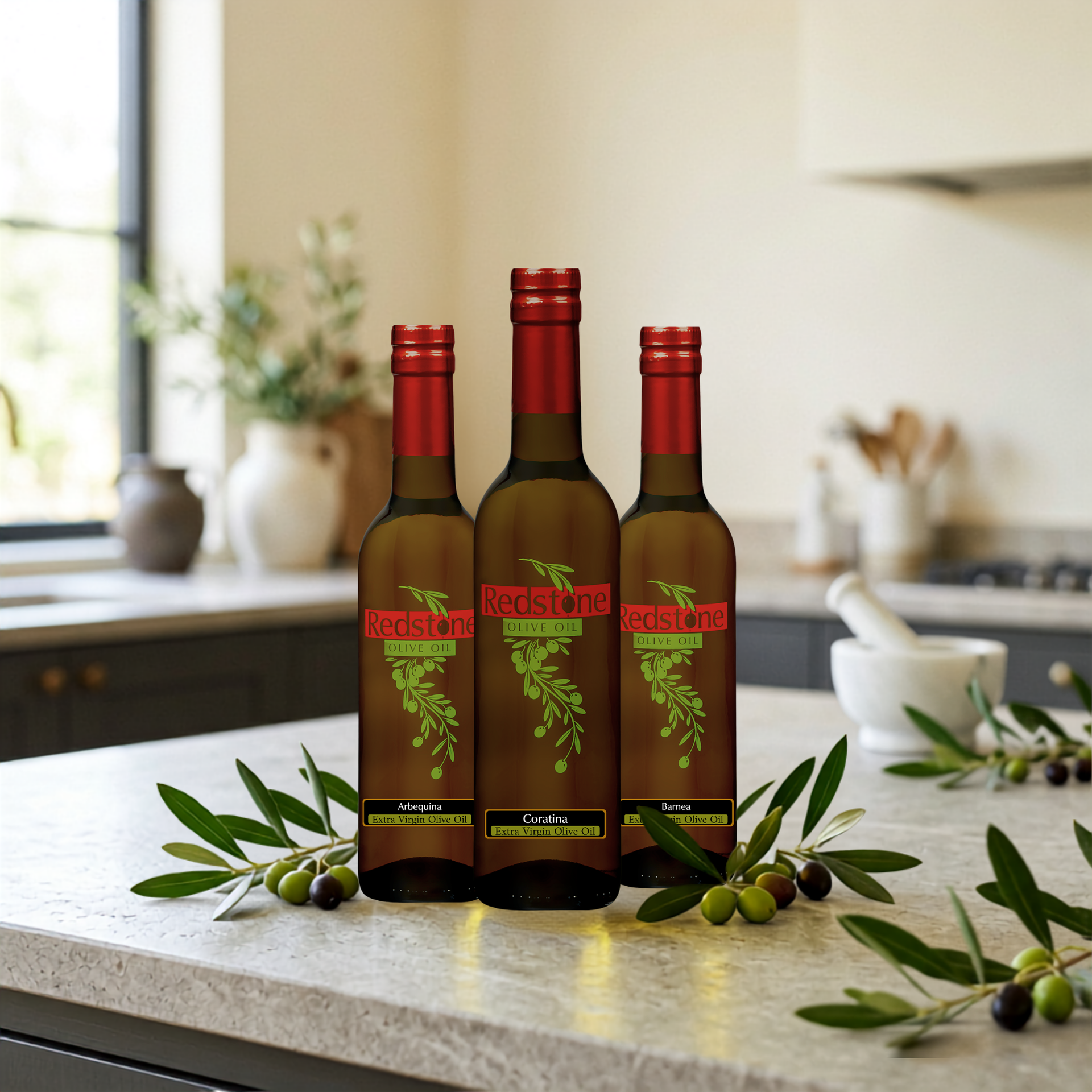
Quick answer: Redstone just added 3 new extra virgin olive oils harvested in Chile and Peru between March and May 2026 — the freshest oils in our collection. Peruvian Coratina tests at 606.8 ppm biophenols, one of the highest counts among the new arrivals. Our existing Spanish Manzanillo remains even higher at 664.0 ppm, one of the highest-biophenol EVOOs we carry.

Fresh matters. Here's proof.
Extra virgin olive oil is a fresh product — biophenol content and flavor both start declining the moment oil leaves the press. That's why freshness, not just origin, is the headline for these 3 new arrivals: all harvested within the last few months, all cold-pressed at peak biophenol levels.
Chilean Arbequina — our most recent harvest
Harvested May 2026, Chilean Arbequina is the newest oil in our entire collection. Mild in intensity, with floral and almond notes and a gentle pepper finish — a great entry point for anyone easing into high-quality EVOO.
Peruvian Barnea — balanced and bold
Peru is a newer name in olive oil, and Peruvian Barnea shows why it's worth paying attention to. Harvested March 2026, it delivers pear and fennel sweetness with a peppery finish — robust without tipping into bitterness.
Peruvian Coratina — 606.8 ppm biophenols, no bitter edge
Our second Peruvian Robust, Peruvian Coratina, was harvested April 2026. Coratina typically produces intensely bitter oils, but this one leads with arugula and anise, finishing clean rather than sharp. At 606.8 ppm biophenols, it's one of the higher-antioxidant oils in our new lineup — well above the 220 ppm threshold for Ultra Premium certification.
Don't overlook Manzanillo's biophenol count
Not new to the shelf, but worth a reminder: our Spanish Manzanillo carries 664.0 ppm biophenols — one of the highest antioxidant counts in our entire collection, higher even than Coratina. Almond-forward and peppery, it pairs naturally with this freshness-driven launch.
Why biophenols matter
Biophenols (also called polyphenols) are the antioxidant compounds responsible for an olive oil's peppery bite and its shelf stability. Higher biophenol counts are generally linked to fresher harvest dates, more robust flavor, and — per ongoing research — potential anti-inflammatory benefits. The Ultra Premium standard requires a minimum of 220 ppm; most commercial EVOOs test between 100–200 ppm.
How to use these oils
Barnea, Coratina, and Manzanillo (all Robust) are best as finishing oils — drizzled over roasted vegetables, grilled meats, or crusty bread. Chilean Arbequina's Mild profile makes it a versatile everyday oil for dressings and light sautéing.
Frequently Asked Questions
Why does harvest date matter for olive oil?
Biophenol content and flavor intensity are highest right after pressing and decline over time — fresher oil means more antioxidants and better flavor.
Which of the 3 new arrivals has the most antioxidants?
Peruvian Coratina, at 606.8 ppm biophenols.
Does Redstone carry any oil with more biophenols than Coratina?
Yes — Spanish Manzanillo, at 664.0 ppm, is one of the highest-biophenol oils in the entire collection, though it's not part of this new-arrivals launch.
What's a good biophenol level in olive oil?
Ultra Premium certification requires at least 220 ppm. Oils above 400 ppm are considered high-biophenol; Redstone's Coratina (606.8 ppm) and Manzanillo (664.0 ppm) are both well above that mark.
Are these new oils good for cooking?
The Robust oils (Barnea, Coratina) are best as finishing oils rather than high-heat cooking. Chilean Arbequina's mild profile makes it more versatile for everyday cooking.


